The New World Order — The Future of Trade in a Multipolar System
How should we expect upcoming business style

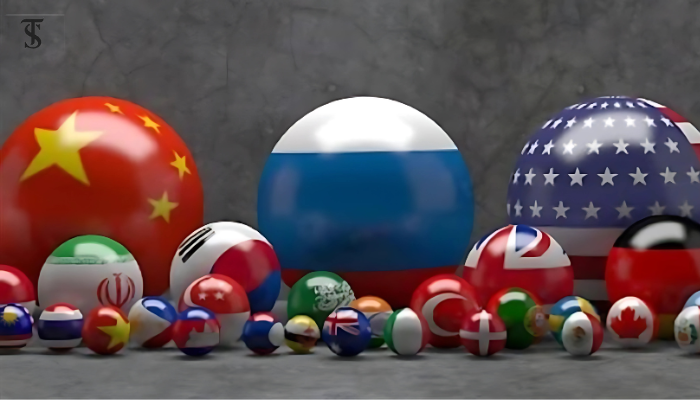
The unipolar world that emerged with the end of the Cold War in 1991 made possible an accelerating globalization process under US leadership. The multilateral trading system built under the WTO offered a structure grounded in relatively consistent rules and a predictable arbitration mechanism. Many analysts argued that this system was the only alternative, that it would solidify into a universal norm. Looking back, that era now resembles a short-lived exception.
Today the world is in transition toward a complex multipolar system in which multiple great powers simultaneously compete with one another and remain, to varying degrees, interconnected. This transition represents a fundamental transformation not only in terms of security balances, but in the structure, rules, and underlying logic of international trade itself.

From Unipolarity to Multipolarity: What Has Changed?
The greatest contribution of the unipolar order to trade was stability. When the rules set by a single dominant power are determinative, both allies and rivals carry strong incentives to comply with those rules. The US capacity to both offer market access and impose penalties for violations provided the system with a certain foundation of authority.
In the multipolar system, this authority is distributed across multiple centers. China has grown into a power that rivals the US in global trade volume; the European Union has emerged as an independent actor in normative power projection; and India, by virtue of both its economic scale and strategic autonomy, has become a decisive third voice. In this landscape, rules imposed by a single center are losing their force, and a more negotiated, more contested system is emerging — one in which every major actor seeks to have its own preferences and norms accepted.
The Great Divergence: Decoupling or Derisking?
Since the late 2010s, US–China competition has generated systematic decoupling pressure against global economic integration. The technology sector is the most visible stage of this tension. The US banned component sales to Huawei, restricted Chinese companies from listing on US stock exchanges, and placed controls on the export of advanced AI chips and chipmaking equipment. China responded by imposing restrictions on the export of critical raw materials, launching inspections of foreign consultancy firms, and accelerating moves to build its own technology ecosystem.
Europe adopted a distinct position in this bilateral divergence. Officials prefer the concept of “derisking” over “decoupling” — full separation. This approach means not severing all economic relations with China, but identifying and reducing critical dependencies while placing asymmetric power relationships on more balanced footing. The EU’s additional tariffs on electric vehicles imported from China, foreign subsidy investigation mechanisms, and data security regulations are concrete expressions of this approach.
The distinction between derisking and decoupling carries important practical implications for business. Full decoupling implies a splitting of the market and the obligation to choose sides. Derisking means reducing vulnerabilities and diversifying dependencies — it keeps the possibility of maintaining relationships with both sides open for longer. Yet this second path also has limits: as tensions escalate, neutrality becomes progressively harder to sustain.
The Growing Weight of the Global South and Strategic Autonomy
The most significant new dynamic of the multipolar system is visible in the way the Global South relates to great-power competition. India, Indonesia, Brazil, South Africa, Turkey, Egypt, and the Gulf states are emerging as countries that seek strategic autonomy rather than choosing sides in the rivalry between great powers. They maintain relationships with both the West and China and Russia simultaneously, treating geopolitical pluralism not as a threat but as a source of bargaining power.
India is the most striking example of this picture. Without being a NATO member, the country is simultaneously deepening defense and technology cooperation with the US while continuing to purchase discounted crude oil from Russia. It is both an active member of BRICS and in close coordination with the US, Japan, and Australia within the framework of the Quadrilateral Security Dialogue (Quad). While this multi-directional balancing act occasionally generates discomfort in Western capitals, India’s economic scale and strategic position make it increasingly difficult for any single bloc to impose its demands.
For businesses, this situation is both an opportunity and a source of complexity. Global South markets are growing rapidly and developing a substantial middle class. But operating in these markets often requires compliance with both Western and Eastern standards — and sometimes demands navigating regulatory frameworks that are internally contradictory.
Digital Trade and Technological Sovereignty: A New Battleground
Alongside trade in physical goods, sovereignty over data flows, digital services, and technology infrastructure has become one of the most heated topics of debate in the multipolar system.
China’s Great Firewall demonstrates that a certain decoupling from the global internet ecosystem occurred decades ago. Europe’s General Data Protection Regulation (GDPR) addressed data sovereignty within a regulatory framework, binding the conditions under which European users’ data could leave EU borders to strict rules. The US, through the debates over TikTok and other China-linked digital platforms, brought the security dimensions of foreign control over digital infrastructure into the public agenda.
This partial digital fragmentation — known as the “splinternet” — carries profound consequences for every business engaged in digital trade. Achieving compliance with different data storage requirements, different content moderation standards, and different AI regulations across different geographies is growing increasingly complex and costly. Digital infrastructure has now entered boardroom agendas as a geopolitical matter.
The Crisis of Multilateralism and the Search for New Architectures
The WTO’s dispute resolution mechanism has been largely paralyzed by the US blocking appointments to the Appellate Body for years. This deadlock has made it effectively impossible to resolve trade disputes within a binding international framework.
Various architectural experiments are emerging to fill this void
Regional trade agreements are coming to the fore as an alternative mechanism that sets rules among specific groups of countries more quickly, rather than waiting for the WTO framework. Sectoral agreements — covering areas such as digital trade, carbon border regulations, or specific mechanisms for critical raw materials — are also being tested. Beyond these, small but powerful country groupings such as the G7 are taking on the role of de facto rule-setters in certain domains.
The result is that a single, coherent, universal trade law is being replaced by a mosaic of regional and bilateral mechanisms that overlap, occasionally contradict one another, and are constantly renegotiated. This picture reduces predictability while raising the value of flexibility.

Key Takeaways for Business Leaders
In a multipolar world, the “single global strategy” approach is rapidly becoming obsolete. What is needed instead are modular structures that are geographically differentiated, capable of adapting to regulatory pluralism, and able to adjust quickly to shifts in geopolitical alliances.
Strategic management must now encompass not only sectoral competitive analysis but also great-power competition, regional bloc formation, and digital sovereignty debates. It is becoming increasingly necessary for companies to invest in institutional intelligence capacity, work with geopolitical risk specialists, and address these issues regularly at board level.
Finally, this must be emphasized: the complexity of the multipolar world contains not only risk but also opportunity. Companies that can read geopolitical pluralism, identify the gaps in alliance geometry, and develop their adaptive capacity faster than their peers will emerge from this period of transformation stronger than before.