Economic Weapons; Sanctions, Trade Agreements and Trade Wars

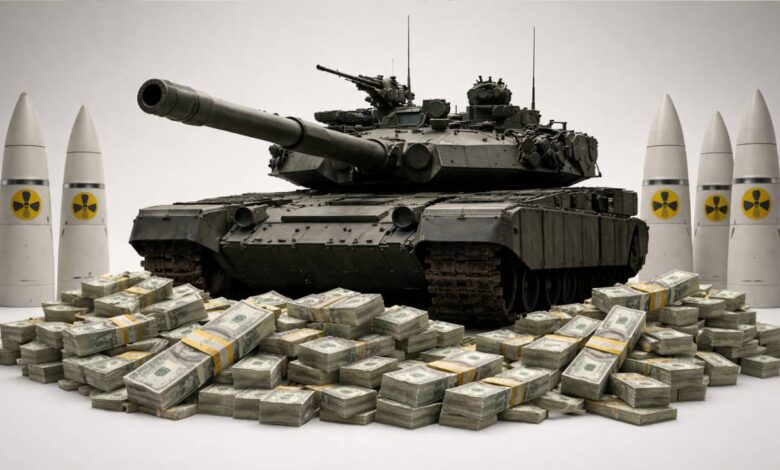
During the Cold War, competition between great powers was conducted primarily through military means: arms races, proxy wars, alliance expansion. Today, the arena of conflict has shifted substantially to the economic domain. Sanctions, export controls, preferential trade agreements, customs tariffs, and state-backed industrial policies have become among the most frequently deployed instruments of modern statecraft. Understanding this transformation is of vital importance for every business operating on the international stage.
Sanctions: Theory, Practice and Limits
Sanctions are a pressure mechanism built on the premise that a state or coalition of states can demand behavioral change from a target country by restricting economic relations to some degree. In theory, they appear highly attractive: they can be applied at far lower cost than military intervention, they are relatively easier to legitimize in the eyes of the international community, and they directly affect the politicians and economic elites of the targeted country.
However, the historical record of effectiveness is mixed. There are cases where sanctions have produced behavioral change: the contribution of anti-apartheid sanctions to pressure on the South African regime, the role of Western pressure in persuading Libya to abandon its chemical weapons program, or the economic stress created by Western sanctions during the lead-up to Iran’s 2015 nuclear agreement. Yet in every one of these successes, sanctions did not operate alone — they functioned alongside diplomatic negotiations, domestic political pressures, and other instruments.
The failures are far more numerous. The embargo imposed on Cuba for more than sixty years produced no regime change. North Korea continued developing its nuclear program despite decades of intense sanctions. The sweeping post-2022 sanctions against Russia disrupted the Russian economy, but alternative trade routes built through China, India, Gulf states, and various African and Latin American countries meant that the Russian economy did not experience the collapse many analysts had predicted.
The most critical factor determining sanctions effectiveness is the breadth of participation. Unilateral sanctions produce limited impact when the target country can easily find alternative partners. Multilateral sanctions are more powerful, but assembling a large-scale coalition requires both diplomatic and economic concessions.
The Impact of Sanctions on Business: Compliance and Secondary Sanctions Risk
From a business perspective, sanctions mean far more than direct trade prohibitions. Secondary sanctions risk — the threat of sanctions exposure for third-party companies doing business with a sanctioned country — has become one of the most pressing compliance issues in international trade in recent years.
The US Treasury Department’s OFAC unit, or the EU’s sanctions lists, can target not only the states directly in their crosshairs but also foreign companies and individuals conducting certain transactions with those states. This means that even small and medium-sized enterprises must now build comprehensive sanctions compliance systems. A single misstep can result in hundreds of millions of dollars in fines and bans from market access.
Trade Agreements: Not Just Economics — Strategic Geometry
Free trade agreements carry deep geopolitical logic beneath their technical exterior. Every agreement is not merely a tariff reduction — it is a map of the political assurances parties give one another and the economic order they wish to construct.
The Trans-Pacific Partnership (TPP), championed by the United States in the early 2010s, is the clearest illustration of this dynamic. While the agreement technically encompassed twelve Pacific basin countries, its strategic purpose was unambiguous: to build a US-centered Asia-Pacific trade architecture that excluded China. Trade rules, in this framework, were an instrument for sustaining hegemony. When the Trump administration withdrew from the agreement in 2017, the US was effectively stepping outside the architecture it had built; the remaining eleven countries brought it into force under the name CPTPP. China, in turn, sought to fill the gap with the RCEP, a framework it led in negotiating.
The European Union’s trade agreement strategy represents a different model. The EU typically incorporates clauses on environmental standards, labor rights, institutional transparency, and the rule of law into agreements it negotiates with third countries. This approach reflects Brussels’ systematic integration of values projection with trade policy. Trade agreements signed with Ukraine, Georgia, and various African nations have functioned as instruments of political bond-building well beyond mere economic cooperation.
Post-2018: The Weaponization of Tariffs and Sectoral Export Controls
The US–China trade war represented the first serious rupture in the free trade consensus that had held since the 1990s. The sweeping tariffs the US imposed on Chinese goods in 2018 and 2019 were initially presented as a negotiating lever, but despite successive rounds of negotiations and partial agreements, the bulk of those tariffs solidified into a permanent structure. Subsequent administrations maintained the majority of these tariffs and in some sectors raised them further.
China retaliated by targeting American agricultural products and the aviation sector. American agriculture — soybean exports above all — faced tens of billions of dollars in losses as Chinese buyers redirected purchases toward Brazil and Argentina.
Even more striking than the tariffs was the development in the domain of export controls. US restrictions on advanced semiconductor and artificial intelligence chips signaled that geographically limiting access to certain technologies on national security grounds had become a new norm. This move marked the implicit endpoint of decades of technology globalization.
Key Takeaways for Business Leaders
Regardless of which market you operate in, you need to monitor the geopolitical alliance network that market belongs to on a regular basis. Changes to sanctions lists, export control decrees, and the renegotiation of trade agreements can transform your daily operations within days.
Your legal, compliance, and geopolitical risk teams should no longer function as separate units — they must operate as a single integrated strategic intelligence function. For companies operating across multiple geographies in particular, achieving compliance with overlapping sanctions regimes is growing increasingly complex. Companies that invest early in this area gain both legal and operational advantages at moments of crisis.