The Foundations of International Politics on Trade

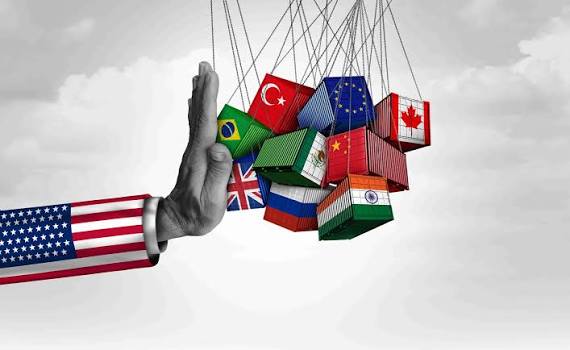
Power and Market — The Foundations of International Politics on Trade
Global trade is not a purely economic phenomenon. Behind every export contract, every customs tariff, and every free trade agreement lies a political calculation. As a business leader operating in international markets, building a sustainable strategy without grasping this reality is simply not possible. Trade and politics have been intertwined forces throughout history; yet today this entanglement has become both more visible and more consequential than ever before.
What International Relations Theory Tells Us About Trade
The discipline of international relations offers three foundational frameworks for understanding how states shape trade policy.
Realism holds that states in the international system pursue, above all else, their own security and the maximization of their relative power. From this perspective, trade is supported only insofar as it serves strategic interests. If the economic gains a state derives from trade give its rival an even greater advantage, the state may choose to forgo that trade entirely. In the realist framework, what matters is not absolute gain but the balance of relative power. This lens is particularly useful for explaining the US technology export restrictions against China, or Japan’s policy of diversifying foreign suppliers in its defense industry.
Liberalism argues that mutual economic interdependence binds states together and reduces the probability of conflict. According to this view, trade integration does not merely produce prosperity — it also lays the groundwork for peace. The more states trade with one another, the higher the cost of inflicting harm on each other, and therefore the more incentive they have to avoid conflict. The decisions of Western policymakers throughout the 1990s and 2000s to deepen economic ties with China and Russia were, in large part, driven by exactly this liberal logic.
Structuralism contends that the global trading system has historically been designed to serve the interests of large, advanced economies. The rules of the WTO, intellectual property regimes, and the architecture of international financial institutions have all been shaped, over time, to reflect the preferences of certain states. This structure makes it harder for weaker states to compete on equal terms, while enabling stronger states to extract disproportionate benefits from the system.
In practice, these three perspectives do not exclude one another. On the contrary, behind almost any trade policy decision lies a combination of all three logics, weighted differently. States use trade policy simultaneously for economic gain, geopolitical influence, and the management of domestic political balances.
A Historical Perspective: Trade Has Always Walked Alongside Politics
The notion that trade is independent of politics is, in fact, a relatively recent illusion. Historically, the great trade routes have always coexisted with political and military power. The Silk Road was not merely a corridor for transporting Chinese silk to Europe — it was also a pathway for political influence, religious missionary work, and the transfer of intelligence. The voyages of Portuguese and Spanish navigators seeking to break the Ottoman Empire’s trade monopoly over the Eastern Mediterranean cannot be explained by economic calculation alone; behind them lay a powerful geopolitical vision.
After the Industrial Revolution, British free trade doctrine was the ideology of the era’s dominant power. As Britain preached free trade to the rest of the world, it had already industrialized and secured competitive advantage; open markets provided British manufactured goods with global access. The Bretton Woods system built by the United States after the Second World War followed a similar logic: having shouldered the burden of postwar reconstruction, the US both rehabilitated Europe through the Marshall Plan and elevated its own economic paradigm to the status of global norm through GATT and the IMF.
Interdependence: Shield or Trap?
The most debated question today is this: does economic dependence truly offer a guarantee against war and conflict?
The liberal optimism dominant throughout the 1990s and 2000s gave a resounding yes to this question. The Germany–Russia relationship became the crystallization of this belief. For years, German business leaders and politicians defended the Nord Stream pipelines as both a profitable energy project and a geopolitical stabilizer that integrated Russia into the European system. Russia’s dependence on Germany as an energy customer, and Germany’s dependence on Russian markets and cheap energy, seemed to constitute a mutual guarantee system.
The invasion of Ukraine in 2022 demolished this thesis. Interdependence only functions as a deterrent when both sides have an interest in preserving the status quo. When one party transforms into a revisionist power intent on fundamentally changing the system, economic dependence becomes not a security shield but a serious vulnerability. Germany was forced to substitute, within a matter of months, Russian gas that had accounted for sixty percent of its total energy imports. This process resulted in a deep cost crisis for German industry and a rapid escalation of energy prices across Europe.
This example does not mean that liberal theory has been entirely refuted. Economic interdependence remains a meaningful stabilizing factor. But for that interdependence to function as a deterrent, the other party must have a stake in the status quo. For revisionist powers, that calculation changes entirely.
The Domestic Political Dimension of Trade Policy
International trade decisions are not merely foreign policy choices — they are also reflections of domestic political equilibria. Protectionist tariffs may stem not from economic necessity but from the power of political lobbying groups that represent specific industries. Free trade agreements do not simply determine economic efficiency; they determine which sectors win and which lose, which is why every agreement is also a contest of domestic political power.
The tariffs imposed by the US to protect steel and aluminum producers cannot be explained by pure economic logic. Behind those decisions lies the political weight of industrial constituencies that represent key electoral votes. China’s state subsidies to agricultural and energy sectors are, in large measure, products of domestic political pressures as well. When analyzing trade policy, one must read domestic political dynamics as carefully as external pressures.
A Sectoral View: Which Industries Are Most Vulnerable?
The sectors that feel the pressure of the geopolitics–trade intersection most acutely are those with strategic significance: defense technologies, energy, food security, communications infrastructure, and critical raw materials. In these sectors, focusing solely on economic efficiency means ignoring the geopolitical variable entirely.
Sectors that appear less strategic are nonetheless exposed to indirect effects. A luxury consumer brand can become a target for retaliatory tariffs during a trade war. A software company may be forced to exit certain markets due to data sovereignty regulations. A logistics firm operating a route between two countries whose bilateral relationship has deteriorated — one the exporter, the other the importer — may suddenly face an overwhelming compliance burden.
Key Takeaways for Business Leaders
The greatest obstacle to entering a market is no longer customs tariffs — it is geopolitical positioning. Before committing to large-scale investment in any country, these questions must be asked: Where does this country stand within the global balance of power? Could its alliance structure transform over the next decade? Is there a risk of being caught between two countries whose bilateral relationship is deteriorating?
Trade moves in the footsteps of politics. Businesses that lack the capacity to read geopolitics are eliminated — not by the market, but by their competitors. For this reason, corporate strategy functions can no longer limit themselves to sector-level competitive analysis; they must also encompass country risk assessment and great-power competition.





Bir Yorum